Excerpt
Enduring the School of Preparation
The Lord does not use men whom He has not trained. There is no army on earth that does not go through rigorous training which is intended to fulfil the reason for their calling. So also is it in the spirit. Enduring the school of preparation becomes inevitable since the entire training process is not what the flesh is previously accustomed to.
David's response to Goliath who led the Philistine army to defy the armies of the Living God was a result of the revelation he had. Although Goliath had a great reputation, David stood his ground by understanding, for he had endured the school of preparation before then. (1 Sam. 17:6)
The state of Goliath represents uncircumcision. Uncircumcision is a posture of illegality in the spirit. (1 Sam. 17:19-30)
After New Birth, there is a need for us to allow the Lord to deal with the carnality in our souls in order to be enlisted in God’s army: The core qualification of God’s army is that our souls must be constantly and consistently redeemed.
Our personal encounter/relationship with God is needed if we will overcome the adversity that comes our way in doing God's will in our lives. The determination to put God’s word to use which is an essential part in the school of preparation, is what amounts to the making of the armies of the Living God.
If we will be part of the armies of the Living God, enduring the school of preparation is a sign that we understand the discipline and training involved. The working of grace must weave the spirit of Christ in our soul (nature).
The place of shepherding is the place of the making of the army. Our submission to being discipled, our commitment to serving spiritual authority and our faithfulness with the little committed to us, are the vitals needed to prepare us as the Lord’s army.
The five stones David took, represent the law and contents in the name of the Lord, not just the letters J-E-S-U-S. David understood the arrangement of the army of the Living God; he saw the prototype of it in the spirit and knew that was what Israel represented in nature.
What motivated Israel to request for a king in the book of Judges was ‘self’. They could not discern the leadership of God in their midst but lusted after false order of dominion which thrived in nations around them.
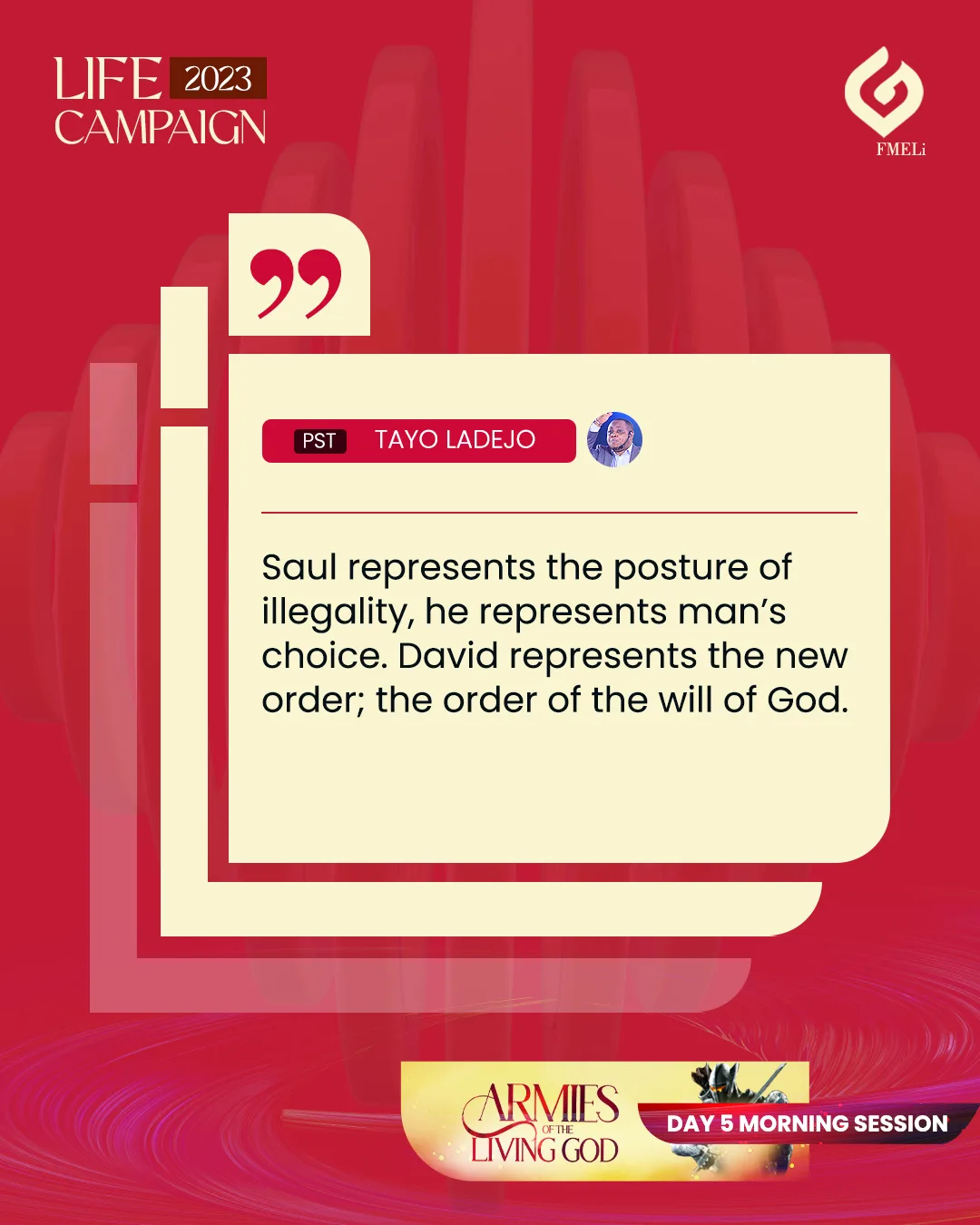
Saul represents the posture of illegality, it represents man’s choice. David represents the new order; the order of the will of God.
It is expedient for the armies of the Living God to arise; this is important for the entrenchment of God’s kingdom. The tendency to exhibit pride and preeminence in the soul of Saul was revealed when he was made king over God’s people.
God is not interested in raising tares, He wants us to be wheat. Although tares look exactly like wheat, the time of harvest (maturity) manifests the difference. When we submit to the process of God, we become mature and bear fruits. (Matt. 13:25-30)
Wheat represents brokenness, while tares describe pride. We must not lean on the arm of flesh in our walk with God. The order of people that God is raising are those governed by the spirit of meekness and are open to correction.
The kingdom of Israel represents the heart of the Father. Saul during his reign became ruthless and disorderly. He failed to regard ranks, as he could not be corrected by anyone. He broke rank, disappointed God and lost the kingdom.
There are boundaries in the spirit that we must watch out for so as not to walk disorderly. We have to allow the discipline of the spirit to imbibe constraint in us. (1 Sam. 13:10-13)
God is a being of order, and if we will journey safely on this path, we must understand ‘ranking’ in the Spirit. David understood these boundaries, which is why he refused to hurt Saul even when he had the opportunity to do so.
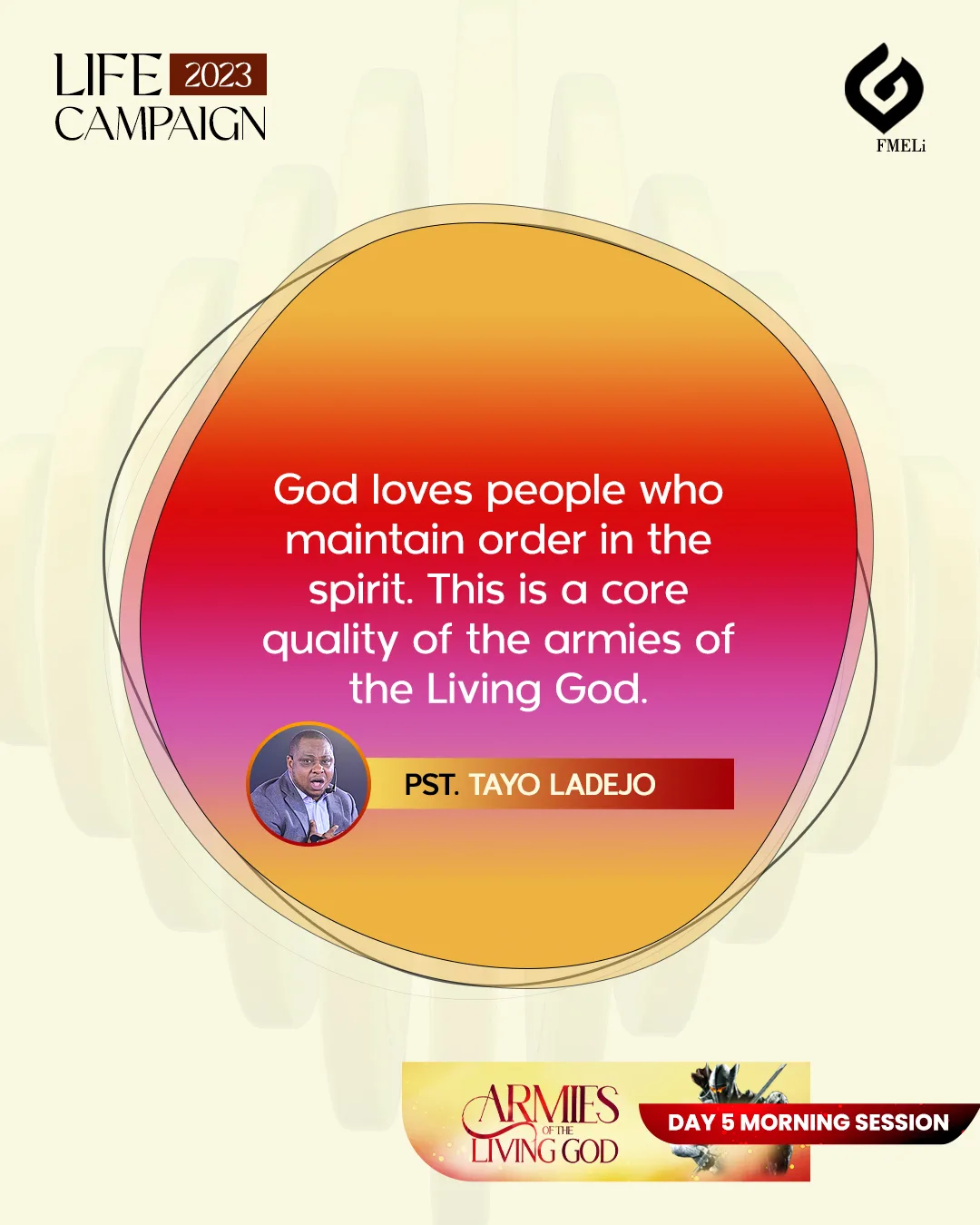
God loves people who maintain order in the spirit. This is the core quality of the armies of the Living God. God does not want us to be people who operate under duress just to satisfy the lust of men. We must not be hasty and desperate for the things of the natural, knowing that we are people who are called to do the will of God.
Hatred and desperation are symptoms of the vacuum and hollow seated deep in the heart of man. They are also symptoms of insecurity and unresolved issues of the heart; they can be subtle. Hatred and desperation must be exposed so the Holy Spirit can deal with them.
When God swears an oath, it signifies that He puts His hands on the throne. The throne of God is synonymous with His sovereignty. When King Saul disobeyed God in 1 Sam. 15, he toyed with the word of oath because they were contrary to the thrones in his heart.
The battle of the ‘wheat’ and the ‘tares’ is the contention between the will of God and vanity. To do the will of God we will have to war against thrones.
The equipping of God’s army is via the administration of the face of God. God does not just want us to seek His hands but His face. Seeking God’s face is knowing God, becoming like Christ and conforming to His image.
God is ushering us into an era where a company of people are built to do the will of God. God is not after a one-man show or an era of stardom. God needs people who have what it takes to do the will of God.
When a servant of God makes himself the centre of attention rather than the kingdom of God, he becomes idolized and the spirit of error can easily sneak in. God is raising sons because it is His desire that Sons must arise.
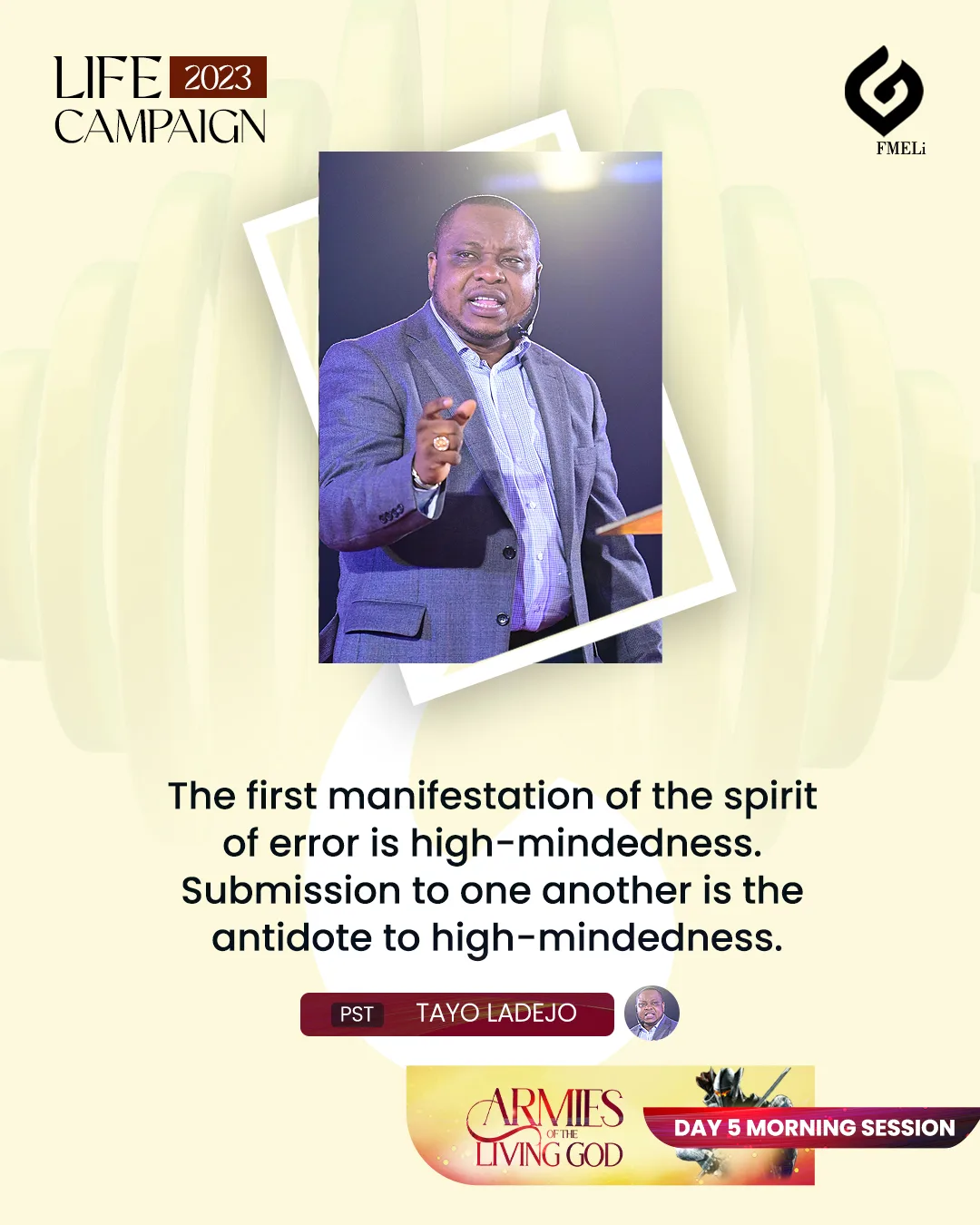
The first manifestation of the spirit of error is high-mindedness, but submission to one another is the antidote to this. There is error when there is a deviation from the pathway of truth.
When our prophetic revelation becomes aggravated above the word of God, error sets in. The height of error is when one begins to manipulate the approval of heaven.
We must understand that nobody knows it all: we all need people to correct us and put us in check when we err. But sin can be added unto sin when we refuse to admit our errors when we are corrected. (Heb. 12:7-9)
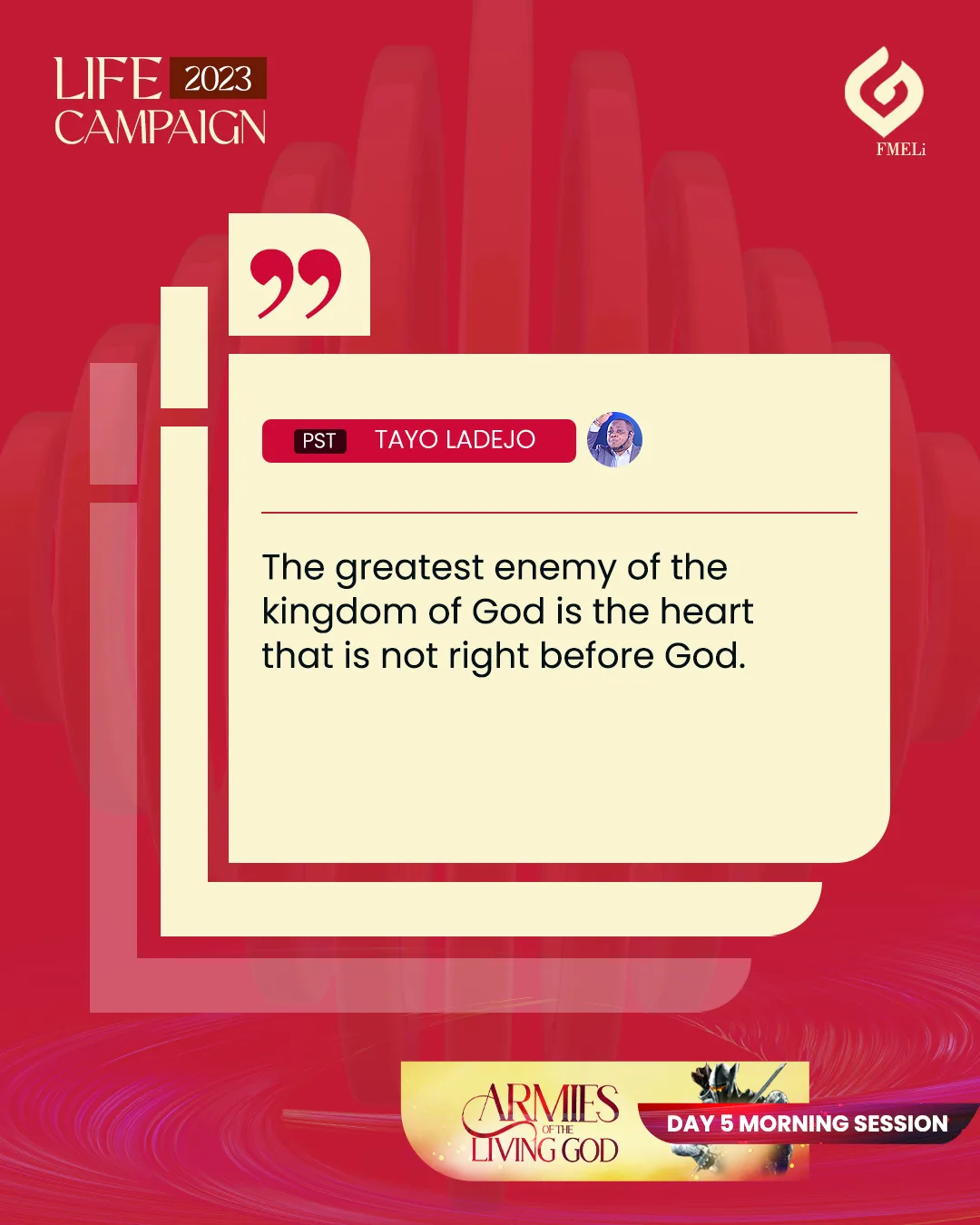
The greatest enemy of the kingdom of God is the heart that is not right before God. When Saul put on a show to please the people and sacrifice to God without prophet Samuel, he was manipulating God’s approval in the process. (1 Sam. 13:9-11, Jer. 17:9)
The power of repentance is that when you are humbled in the face of God’s confrontation, God lifts us. God wants us to imbibe the spirit of repentance and guard against error. (2 Cor. 7:10)
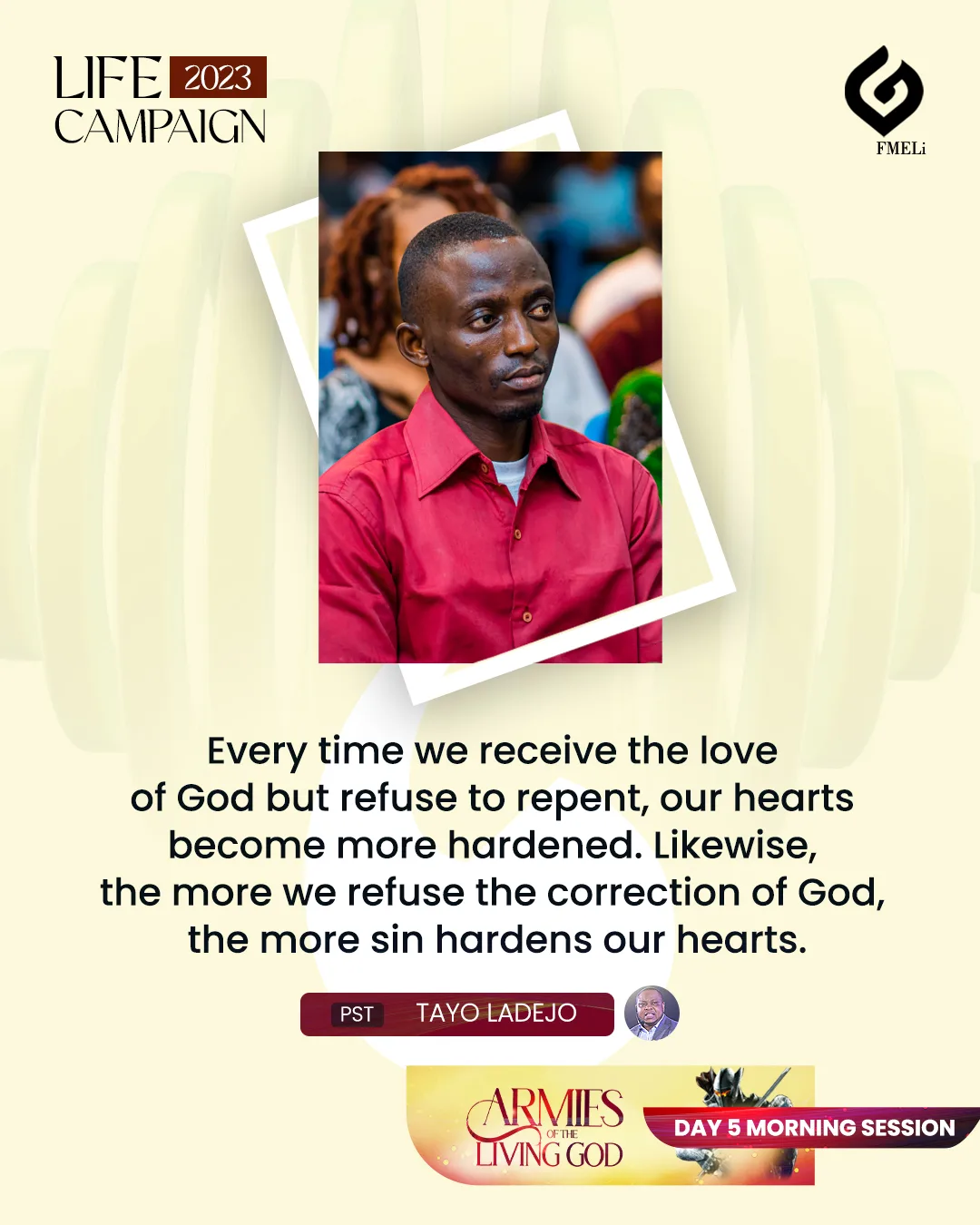
Every time we receive the love of God but refuse to repent, the heart becomes more hardened. The more we refuse the correction of God, the more sin hardens the heart. (Heb. 3:13-15)
The essence of grace is transformation. To reflect the Glory of God within us, grace must change us. The working of Grace within us opens the eyes of our understanding. (Tit. 2:12-13, 1 Tim. 4:1)
The two operations of the enemy that he has used to fight against the church are seducing spirits and doctrines of devils. Apostasy will not occur without the searing of the conscience; the searing of the conscience is done by false doctrine. (1 Tim. 4:1-2)
Self-deception is the fastest route to apostasy; when there are no boundaries, man will be vulnerable to apostasy. When apostasy sets in, the spirit of God departs. When one puts up a show or disguise of God’s presence after he has departed, the spirit of deception takes over.